













JULY , 2026
A wall sconce turns a plain wall into a considered feature, adding warmth and depth that overhead lighting alone cannot achieve. Mobilart curates statement sconces and chandeliers for Montreal homes, with the design expertise to build a scheme that feels layered rather than lit.
Ceiling fixtures light a room; sconces define it. A well-placed sconce adds a layer of accent and ambient light at eye level, drawing attention to the wall and creating warmth that washes down or up rather than flooding from above. A pair introduces visual rhythm across a feature wall, framing what sits between them and giving the surface an architectural quality paint alone cannot achieve. They are never the primary source, but the layer that makes everything else feel considered.
Most sconces read best centred between 60 and 72 inches from the floor, roughly eye level for a standing adult, which limits upward glare and keeps the light where it does the most work. In rooms with higher ceilings, mounting closer to 72 inches keeps the fixture proportionate to the wall. When installing multiple sconces along a single wall, spacing them roughly 6 to 10 feet apart distributes light evenly and reads as intentional design.
A pair of sconces flanking a mirror or mantel is one of the most reliable feature-wall compositions in interior design. Leave 6 to 12 inches of clearance between the inner edge of each sconce and the mirror or artwork frame so the fixtures frame rather than crowd the piece. Picture lights mounted above a frame wash artwork evenly and should be sized to roughly two thirds its width. A symmetrical arrangement gives the wall a composed quality.
Finish ties the sconces to the room. Warm brass and antique gold suit rooms built around timber, velvet, and warm neutrals, while matte black delivers a graphic edge in contemporary spaces and polished or brushed nickel bridges modern and transitional interiors. The bulb matters as much as the fixture: a warm colour temperature between 2,700 and 3,000 Kelvin produces an amber glow that feels inviting rather than clinical. Keep lumens modest for ambient use and add a dimmer for flexibility.
An uplight sconce washes light toward the ceiling, adding perceived height and an open, expansive quality. A downlight sconce casts warmth toward the floor for a cosier, more intimate effect suited to dining rooms and bedrooms. A swing-arm or articulated sconce moves to direct light precisely, making it well suited to reading nooks and bedside walls. A feature wall anchoring a seating arrangement benefits from an uplight, while a reading wall needs articulation and focused output.
Symmetrical placement, with matching fixtures equidistant from a central point, suits formal living rooms, dining rooms, and any wall where a composed, balanced feel is the goal. On a panelled or feature wall, applying the rule of thirds positions sconces at roughly one third and two thirds of the wall's width, avoiding the flatness of a single centred fixture. Before committing to a hole, mock up the positions with painter's tape and step back to assess the spacing.
A fireplace wall with a sconce pair on either side is the most classic application in a living room, framing the mantel and adding warmth to the room's natural focal point. In entryways and hallways, sconces add depth and a sense of arrival to spaces that overhead fixtures often leave feeling flat. Bedrooms benefit from bedside sconces mounted at reading height, freeing the nightstand surface and keeping the light close to where it is needed.
Judging a sconce's glow, finish, and scale from a product photograph is one of the most unreliable aspects of lighting selection. Mobilart's over 25,000 sq ft showroom at 8260 Devonshire, Mont-Royal displays curated statement sconces and chandeliers in room settings where fixtures can be seen lit and in context, with the design team available to help plan a feature-wall scheme. Over 40 years of curation and a family legacy since 1932 inform every fixture in the collection.
Hardwiring a sconce requires an electrician and a permanent wall modification, which is not always practical or permitted in Montreal rental apartments and condos. Plug-in sconces run a cord to a nearby outlet and can be dressed with cord covers to keep the look clean. Cordless rechargeable sconces eliminate the cord entirely, mounting with minimal hardware and removing without trace when a tenant leaves, making the feature-wall lighting layer accessible within the constraints of a lease.
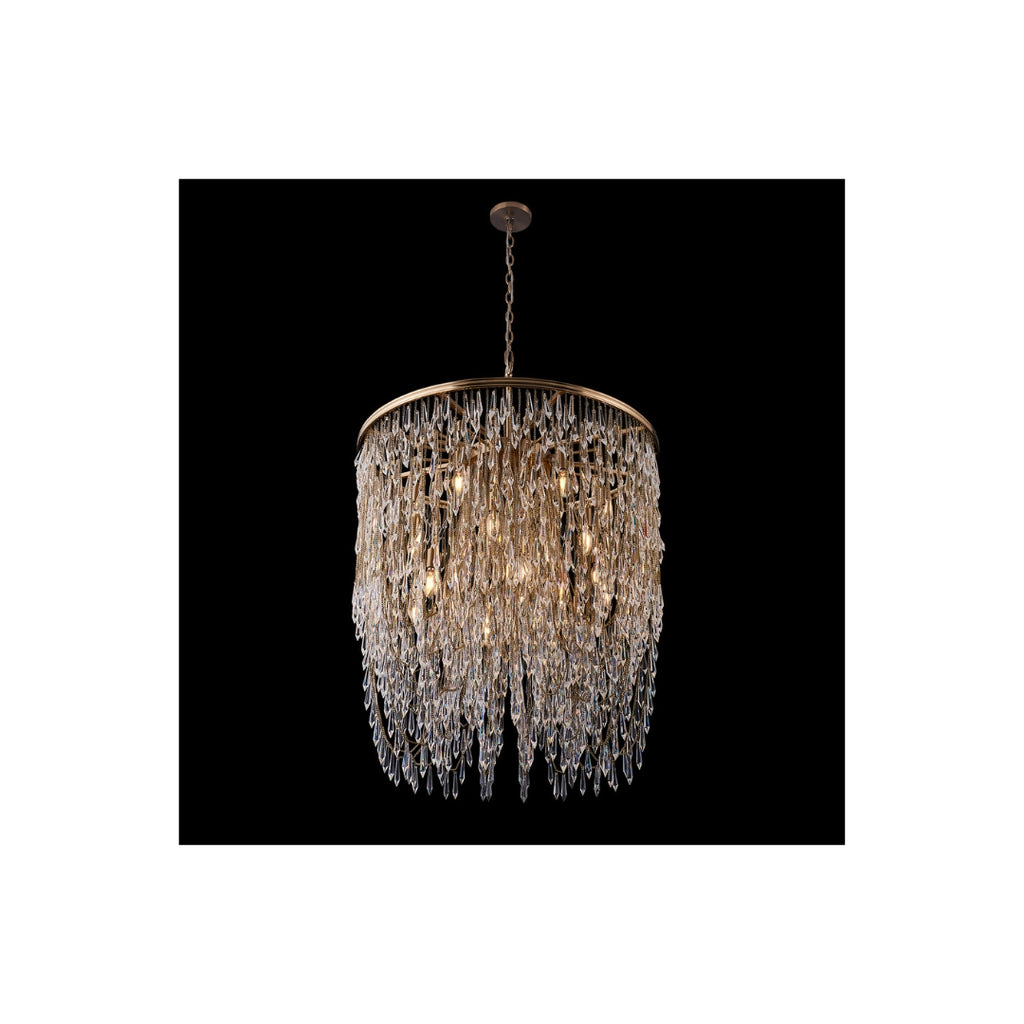
A sconce works best as part of a layered scheme rather than as the room's only light source. Pairing sconces with the room's main chandelier or pendant creates a composition where each layer serves a distinct purpose: the overhead fixture provides general illumination while the sconces add warmth, rhythm, and accent. Separate dimmers allow the mood to be adjusted independently. Mobilart's chandeliers and sconces collection spans both layers in coordinating finishes.
A feature wall lit by sconces without dimmer control misses most of its potential. Dimmers allow the same wall to shift from a bright, well-lit backdrop during the day to a warm, intimate accent layer in the evening. Grouping the sconces on their own dimmer circuit, separate from the room's overhead fixture, gives each layer independent control. Smart dimmers and preset scene controls extend this further, allowing morning, daytime, and evening moods to be recalled with a single tap.
Using a wall sconce well comes down to the same sequence every time: decide what the wall needs to do, set the mounting height and spacing with care, choose a coordinating finish, pair the sconces with whatever anchors the wall, and add dimmer control. A well-placed sconce turns a plain surface into a feature with warmth, rhythm, and depth that no paint colour can replicate. Explore the full sconce lighting range lit and in context at Mobilart's Montreal showroom.
Centre most sconces between 60 and 72 inches from the floor, roughly standing eye level, which keeps light in the most useful range and limits upward glare into seated sightlines. In rooms with standard eight-foot ceilings, the lower end of that range tends to work best. For vaulted ceilings, mounting toward 72 inches keeps the fixture proportionate. Bedside sconces mount lower, at 48 to 60 inches, so light falls where it is needed for reading.
Spacing sconces roughly 6 to 10 feet apart along a wall produces an even spread of light and a sense of rhythmic repetition that reads as designed rather than random. In narrower hallways or smaller rooms, tightening the spacing to 5 or 6 feet keeps the fixtures from looking marooned. Flanking sconces on either side of a mirror or mantel follow a different rule: position them so the inner edge sits 6 to 12 inches from the frame.
No. Plug-in sconces connect to a standard outlet and can be mounted on the wall with the cord managed along the surface or concealed with a cover. Cordless rechargeable sconces remove the cord entirely and require no electrical work. For buyers who want hardwired fixtures and a clean finish with no visible cord, a licensed electrician should handle installation. Many sconce designs are available in both plug-in and hardwired versions, so the decision depends on the space.
Sconces provide ambient and accent light rather than primary general illumination. An uplight sconce directs light toward the ceiling, creating a soft wash that adds perceived height. A downlight sconce casts warmth toward the floor for a cosier effect. Most decorative sconces combine both, with light spilling in both directions from an open shade or a translucent diffuser. The output is intentionally modest relative to a ceiling fixture, designed to layer with overhead light rather than replace it.
Yes, reliably. A pair or row of sconces turns a plain wall into a lit architectural feature with warmth and rhythm that paint or panelling alone cannot achieve. Sconces add the vertical dimension of light to a feature wall, drawing the eye upward and giving the surface a sense of presence at any hour. They work particularly well framing a mirror, a fireplace, or a large-format artwork, where the symmetry of the fixtures reinforces the composition.
Yes. Mobilart's chandeliers and sconces collection includes curated statement sconces across finishes and styles, selected to anchor feature walls and coordinate with a room's broader lighting scheme. The design team at the over 25,000 sq ft showroom at 8260 Devonshire, Mont-Royal is available for a complimentary consultation to help plan a feature-wall lighting scheme. Seeing fixtures lit in a furnished room setting is strongly recommended before committing to a finish or scale.
This website uses cookies to ensure you get the best experience on our website.