La règle de la largeur correcte du miroir
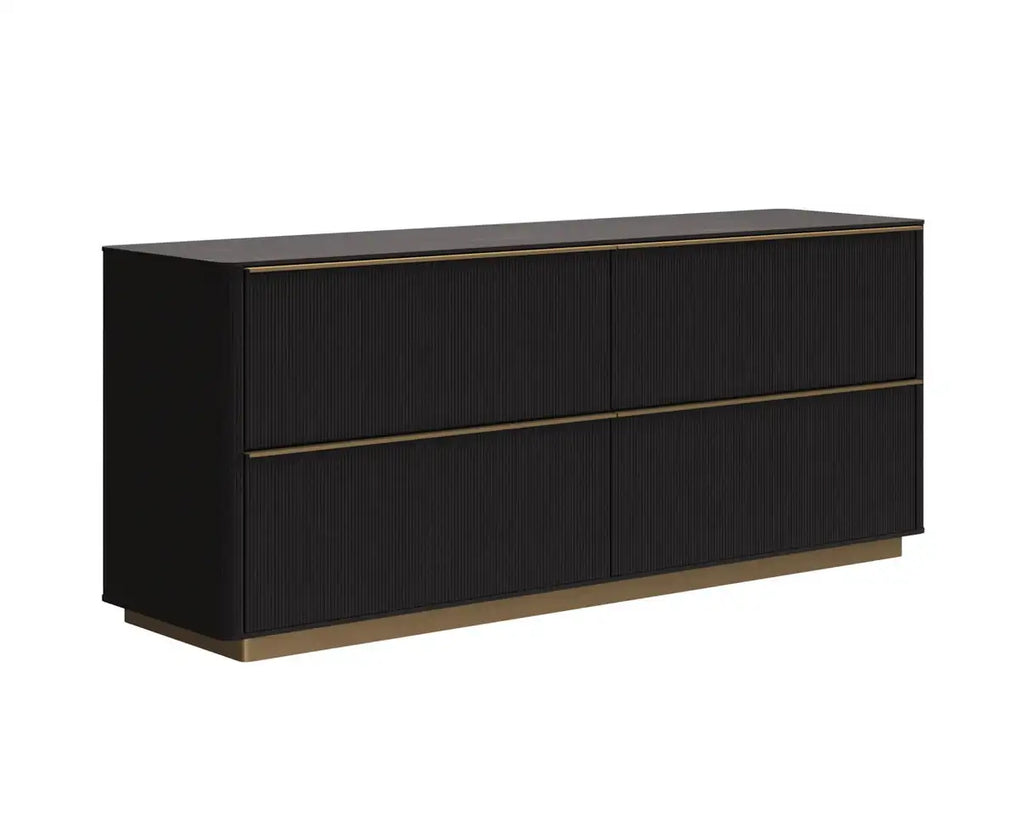
Le miroir doit mesurer environ les deux tiers ou les trois quarts de la largeur de la commode en dessous. Pour une commode standard de 58 pouces, la largeur correcte du miroir se situe entre 39 et 44 pouces. Un miroir plus étroit donne l'impression d'être sous-dimensionné et déconnecté de la pièce en dessous ; un miroir plus large submerge l'arrangement et donne l'impression que le mur est déséquilibré. Les acheteurs qui choisissent un ensemble commode et miroir comme unité assortie peuvent compter sur le fabricant pour avoir résolu correctement ce rapport pour les dimensions spécifiques de la commode.
À quelle hauteur accrocher un miroir au-dessus d'une commode
Le bord inférieur du miroir doit se situer entre 4 et 8 pouces au-dessus de la surface de la commode, ce qui permet de maintenir les deux pièces visuellement connectées tout en laissant de la place pour des objets de décoration. Positionnez le centre du miroir entre 57 et 65 pouces du sol pour un reflet confortable au niveau des yeux. Dans les pièces avec des plafonds standard de 8 pieds, un espace de 4 à 6 pouces empêche le miroir d'apparaître compressé. Dans les pièces avec des plafonds de 9 pieds ou plus, 6 à 10 pouces améliorent la proportion verticale et empêchent le miroir d'apparaître trop bas par rapport au mur.
Ensembles commode et miroir ou pièces séparées
Un ensemble commode et miroir résout la proportion et la finition au moment de l'achat : le cadre, le rapport de largeur et la quincaillerie sont conçus comme une composition unique. Les acheteurs qui meublent une chambre complète bénéficient de la cohérence qu'offre un ensemble assorti sans avoir à rechercher chaque variable indépendamment. Ceux qui ont une forte perspective de design, ou ceux qui mélangent des pièces d'héritage et contemporaines, trouveront que des combinaisons de pièces d'origine indépendante créent des résultats plus originaux, à condition que les deux pièces partagent une norme de qualité constante et un langage matériel ou tonal cohérent dans toute la pièce.
Finition du cadre et coordination des matériaux
Un miroir de commode n'a pas besoin de correspondre exactement à la commode, mais il doit y être lié par le langage des matériaux, le ton de la finition ou le caractère du cadre. La distinction est entre l'assortiment et la coordination. Un ensemble assorti garantit la cohérence ; un miroir d'origine indépendante obtient le même résultat lorsque la finition de son cadre se connecte à un autre élément de la pièce, la quincaillerie du cadre de lit, un luminaire ou la finition d'une table de nuit. Au niveau du luxe, les compositions les plus abouties associent souvent une commode à un miroir qui partage sa famille tonale mais diffère intentionnellement dans sa forme.
Forme du miroir et style de la chambre
Les miroirs rectangulaires conviennent aux chambres traditionnelles et transitoires où la précision architecturale renforce la géométrie existante. Les miroirs arqués apportent de la douceur et fonctionnent bien au-dessus des commodes aux profils linéaires épurés, créant une tension productive entre la forme incurvée au-dessus et le plan de rangement horizontal en dessous. Les cadres en forme de soleil et sculpturaux ont une forte présence décorative et sont mieux placés là où les autres surfaces de la pièce sont suffisamment calmes pour supporter un élément focal. La forme du miroir doit amplifier le langage de conception existant de la pièce plutôt que de le concurrencer ou d'introduire un élément visuel déconnecté.
Comment la lumière affecte le placement du miroir
Un miroir au-dessus d'une commode amplifie la lumière naturelle lorsqu'il est positionné face à une fenêtre, même obliquement. Dans les chambres à coucher avec une lumière naturelle limitée, placer le mur de la commode de manière à ce que le miroir capte la principale source de lumière de la pièce augmente considérablement la luminosité perçue. Évitez de placer le miroir directement en face d'une lumière zénithale intense, ce qui crée des angles de réflexion peu flatteurs. Le placement le plus efficace fait face à la meilleure source de lumière de la pièce et permet à la surface réfléchissante de distribuer cette lumière uniformément dans toute la chambre plutôt que de la concentrer dans un seul coin.
Styliser la surface de la commode
Le miroir est l'ancre de la composition de la surface ; tout autre objet existe en relation avec lui. La variation de hauteur régit l'arrangement : les objets de surface doivent occuper au moins trois hauteurs distinctes, une grande lampe, une plante ou une bougie de taille moyenne, et un plateau bas ou un objet plat. Cette variation crée un rythme visuel qui donne à la surface un aspect composé plutôt qu'encombré. Placez la lampe sur un côté, pas au centre devant le miroir, afin que la face réfléchissante reste visible et que la fonction amplificatrice de lumière du miroir ne soit pas obstruée par l'abat-jour.
Entretien de votre miroir de chambre
Un bon style de miroir de commode devrait durer dans le temps, ce qui signifie qu'il faut accorder un peu de soin au verre lui-même. Nettoyez le miroir avec un chiffon non pelucheux et un nettoyant pour vitres appliqué sur le chiffon plutôt que pulvérisé directement sur le verre, car le surplus de pulvérisation peut s'infiltrer derrière le cadre et endommager le support au fil du temps. Évitez les nettoyants à base d'ammoniac sur une finition antique ou en verre au mercure, car ils peuvent décaper la patine décorative pour laquelle ces miroirs sont choisis en premier lieu.